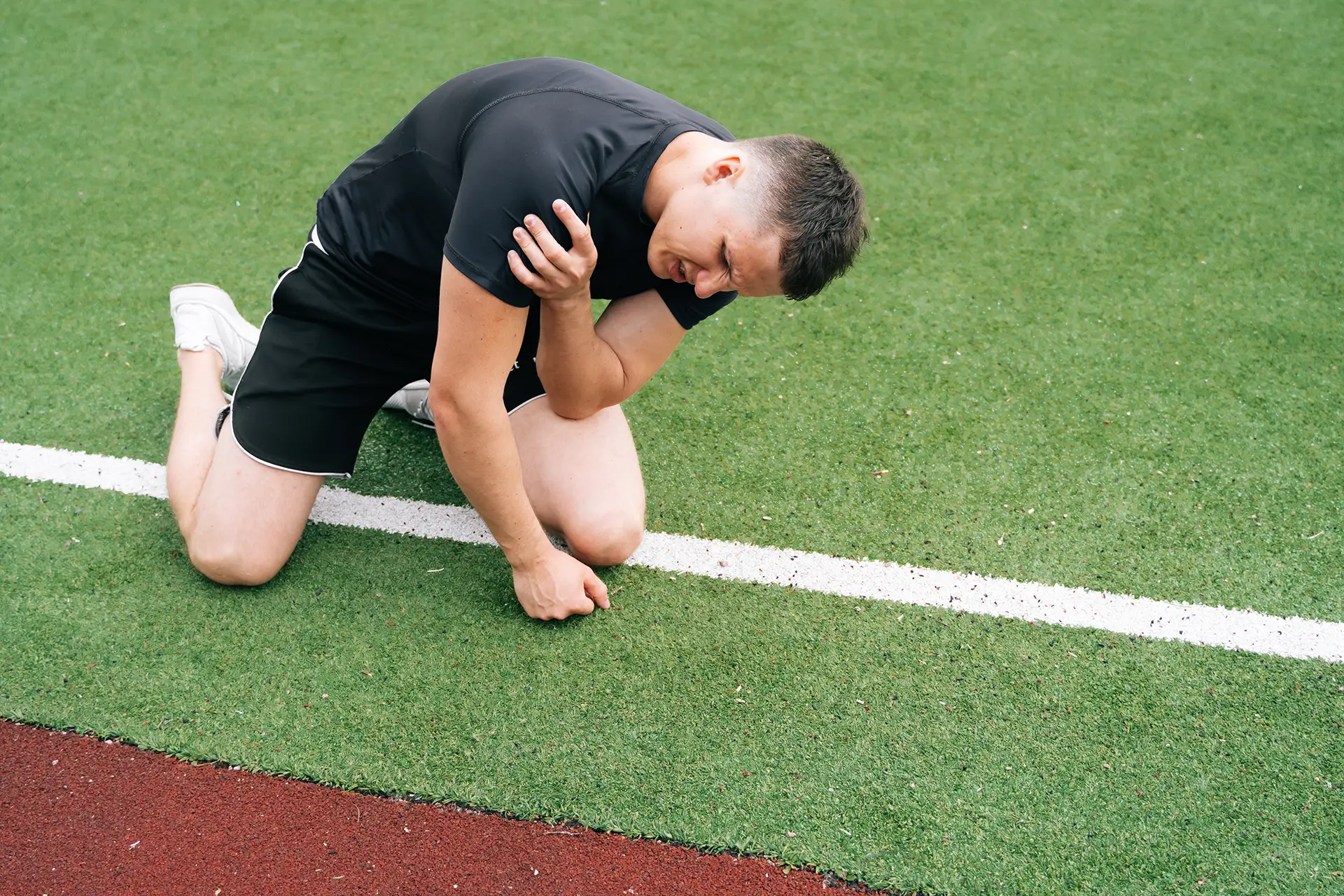
The shoulder is one of the most mobile joints in your entire body. It’s built to move in almost every direction, which makes it incredibly useful, and surprisingly vulnerable. Common shoulder injuries can affect anyone, from weekend athletes to office workers to older adults dealing with the effects of daily wear and tear. Because the shoulder plays a role in so many everyday activities, even a relatively minor problem can quickly disrupt your quality of life.
If you’re dealing with shoulder pain, stiffness, or weakness, you’re not alone. Understanding what may be happening in your shoulder, and what can be done about it, can be a valuable first step. In this post, we’ll walk through some of the most common shoulder injuries, what they may feel like, and what treatment options might be available to help you get back to the activities you enjoy.
Key Takeaways
- Common shoulder injuries include rotator cuff tears, shoulder impingement, dislocations, SLAP tears, frozen shoulder, and AC joint separations.
- Many shoulder injuries share similar symptoms, which is why an accurate diagnosis from a specialist is important.
- Treatment options range from physical therapy and anti-inflammatory medications to injections and surgery, depending on the injury.
- Seeking an evaluation early may help prevent a minor shoulder issue from developing into something more significant.
Rotator Cuff Tears
Rotator cuff tears are among the most frequently diagnosed common shoulder injuries, and they affect people of all ages and activity levels. The rotator cuff is a group of four muscles and their tendons that wrap around the shoulder joint. Together, they hold the ball of your upper arm bone in the socket and power the arm’s movements. A tear can happen suddenly, such as catching yourself during a fall or lifting something too heavy, or it can develop gradually from years of repetitive overhead activity.
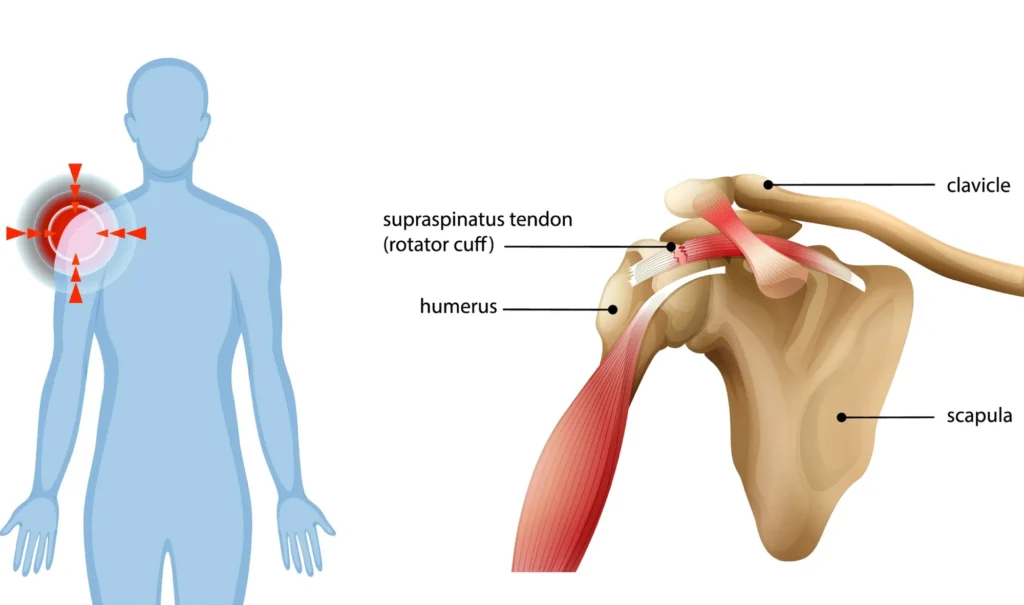
Symptoms may include a dull, aching pain deep in the shoulder, noticeable weakness when lifting or rotating your arm, and difficulty sleeping on the affected side. Some people also describe a popping or catching sensation during movement.
Shoulder Impingement
Shoulder impingement, sometimes called subacromial impingement, occurs when the rotator cuff tendons get pinched or irritated as they pass through a narrow space beneath the bony arch at the top of your shoulder. It’s one of the most common shoulder injuries seen in both active and less active individuals alike. Shoulder impingement is sometimes associated with bursitis, an inflammation of the small, fluid-filled sac that cushions the joint.
This condition tends to develop gradually. Overhead activities, such as swimming laps, throwing a ball, painting walls, or reaching for things on high shelves, are frequent contributors. The pain typically shows up at the front or side of the shoulder and may radiate part of the way down the arm. Reaching overhead or behind your back often makes it worse, and nighttime pain is common, especially when lying on the affected side.
Shoulder Dislocations
A dislocation happens when the ball of the upper arm bone is forced partially or completely out of the socket. This usually occurs after a fall, a direct blow, or a collision in a contact sport. A dislocated shoulder is rarely a subtle injury. The shoulder may look visibly misshapen, the pain is typically intense, and the arm may feel numb or impossible to move normally. Most dislocations occur in the forward direction (anteriorly), though less common posterior dislocations do happen.
After an initial dislocation, the surrounding ligaments and soft tissue can be stretched or torn, making the joint more vulnerable to future episodes. This is often referred to as shoulder instability. Younger, more active patients may face a particularly elevated risk of recurring dislocations after their first event. Even if the shoulder pops back into place on its own, getting a professional evaluation is still a good idea, both to rule out associated injuries and to discuss how to protect the joint going forward.
SLAP Tears
SLAP stands for Superior Labrum Anterior to Posterior. That’s a mouthful, but the concept is fairly straightforward. The labrum is a ring of fibrocartilage that surrounds and deepens the shoulder socket, helping keep the joint stable and supported. A SLAP tear is an injury to the top portion of that cartilage ring, right where the biceps tendon attaches.
These injuries are often seen in overhead athletes (baseball pitchers, swimmers, tennis players), but they can also result from a fall on an outstretched arm or a sudden, forceful pull. Symptoms typically include a deep aching pain inside the shoulder, a catching or locking sensation, and pain with specific movements like overhead reaching or throwing. Some people notice a decrease in throwing velocity or accuracy as well.
Frozen Shoulder (Adhesive Capsulitis)
Frozen shoulder, medically known as adhesive capsulitis, is a condition in which the shoulder joint capsule becomes inflamed, thickened, and tight, leading to significant pain and stiffness. It tends to progress through three stages: a painful “freezing” phase, a stiff “frozen” phase during which pain may ease but motion remains severely limited, and a gradual “thawing” phase where movement slowly begins to return.
The exact cause isn’t fully understood, but certain factors may increase risk. Prolonged shoulder immobility (such as after a surgery or an unrelated arm injury), diabetes, thyroid disorders, and certain hormonal changes are among the known contributors.
AC Joint Separation
The acromioclavicular (AC) joint is where the collarbone meets the highest point of the shoulder blade. An AC joint separation happens when the ligaments holding this junction together are stretched or torn, typically from a fall directly onto the shoulder or a hard blow.
The injury ranges in severity from mild (a minor ligament sprain) to significant (a complete ligament tear with visible displacement of the collarbone). Common symptoms include pain and tenderness at the top of the shoulder, and in more severe cases, a noticeable bump where the collarbone has shifted upward.
This type of injury is frequently seen in contact sports and cycling accidents. Milder grades often respond well to conservative management, while more significant separations may require surgical correction to restore proper shoulder function.
Treatment Options for Common Shoulder Injuries
One of the most important things to understand about common shoulder injuries is that treatment is rarely one-size-fits-all. The right approach depends on a number of factors, including the type and severity of your injury, your age, your activity level, and your overall health and goals. An experienced shoulder specialist will take an individualized approach to care, working to match the treatment plan to what makes the most sense for each specific patient.
Non-Surgical Treatment
Many shoulder conditions respond well to conservative, non-surgical management, particularly when treatment begins early. Depending on the nature and severity of your injury, options may include:
- Physical therapy: A guided rehabilitation program can help restore strength, flexibility, and functional movement. Physical therapy tends to be an important component of treatment for nearly every shoulder condition on this list.
- Anti-inflammatory medications: Over-the-counter options like ibuprofen or naproxen may help reduce pain and swelling.
- Corticosteroid injections: When pain is limiting your ability to participate in therapy or basic daily tasks, a carefully placed corticosteroid injection may provide temporary relief.
- Platelet-rich plasma therapy: PRP injections, created from your own blood, may be administered to the site with the goal of promoting healing.
- Activity modification: Temporarily reducing or avoiding activities that aggravate the shoulder can give the area time to calm down and begin healing.
- Rest and ice: Particularly in the early stages of an injury, reducing load on the shoulder and applying ice can help manage pain and inflammation.
Surgical Treatment
When non-surgical treatment doesn’t provide adequate relief, or when the severity of the injury suggests surgery may be the most appropriate path from the start, your doctor may discuss surgical options. Many shoulder procedures today are performed arthroscopically, through small incisions using a tiny camera and specialized instruments. In some cases, shoulder replacement surgery may be considered.
Summary
Common shoulder injuries like rotator cuff tears, impingement, dislocations, SLAP tears, frozen shoulder, and AC joint separations can all affect your comfort, strength, and ability to do the things you love. The encouraging news is that many of these conditions respond well to thoughtful, appropriate treatment, whether that means a structured physical therapy program, a well-timed injection, or a surgical repair.
Frequently Asked Questions
How do I know if my shoulder pain is serious?
Certain signs suggest you should seek evaluation sooner rather than later. These include sudden, severe pain following an injury, an inability to raise your arm, visible deformity of the shoulder joint, numbness or tingling that extends down the arm, or pain that has persisted for several weeks without meaningful improvement. When in doubt, getting an evaluation is a reasonable step.
Can shoulder injuries heal on their own?
Some mild shoulder injuries may improve with rest, activity modification, and targeted home exercises. However, more significant injuries like large rotator cuff tears or labral tears are unlikely to fully resolve without some form of treatment. Leaving an injury unaddressed can sometimes lead to worsening pain and declining function over time, so it’s generally worth having a specialist take a look.
Is it safe to exercise with shoulder pain?
This depends largely on the nature and severity of the injury. In many cases, staying active with low-impact, pain-free movements is beneficial and even encouraged. That said, pushing through significant pain or continuing activities that consistently aggravate your shoulder can sometimes slow healing or cause further damage.