
Shoulder Surgery and Sports Medicine
Comprehensive Shoulder Care in San Fernando Valley
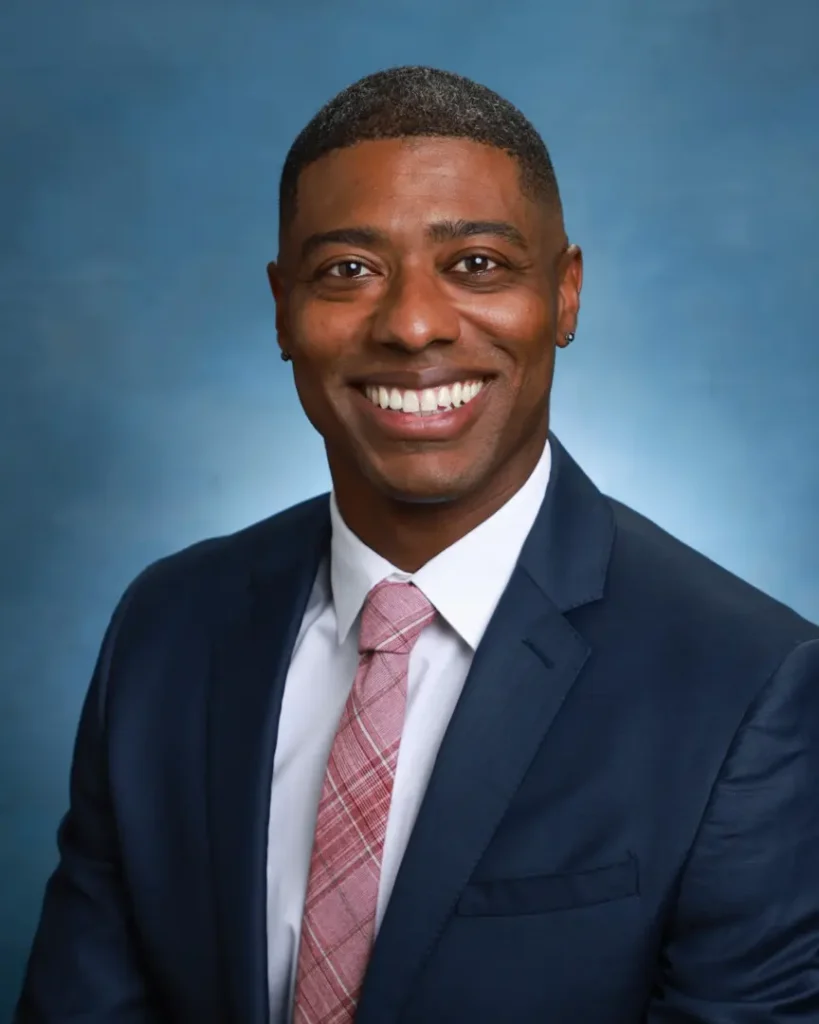
The shoulder is the most mobile joint in the body, and that mobility comes at a cost. Whether the injury is a degenerative rotator cuff tear in a patient over fifty, a dislocation in a contact athlete, or a nagging impingement that will not quit, shoulder problems can take over your life quickly. Taylor Hobson, MD is a fellowship-trained orthopedic sports medicine surgeon who offers the full spectrum of shoulder care, from non-surgical management to arthroscopic repair to total shoulder replacement and reverse shoulder replacement.
Dr. Hobson completed his orthopedic surgery residency at the University of Utah Hospital and a sports medicine fellowship at Case Western Reserve University. He has served as team physician at multiple levels of sport, including the Cleveland Browns (NFL), Cleveland Monsters (AHL), and USFL teams, and currently covers Notre Dame High School athletes in the San Fernando Valley. That range of experience means your evaluation is grounded in what the shoulder actually needs to do, whether you throw a football, swim, lift weights, or simply want to sleep through the night without pain.
A Stepwise, Evidence-Based Approach
Every shoulder workup begins with a careful clinical exam and an honest conversation about what the shoulder is and is not doing. From there, the right treatment depends on the specific diagnosis.
Rotator cuff problems are managed differently based on tear type and patient goals. Partial-thickness tears and rotator cuff tendinopathy often respond well to physical therapy, activity adjustments, and targeted corticosteroid injections. Small, chronic, full-thickness tears in lower-demand patients can also be managed non-operatively in many cases. Larger tears, acute traumatic tears, and tears in active patients typically do better with earlier surgical repair, because tendon quality and muscle integrity tend to deteriorate the longer a significant tear goes unrepaired.
Shoulder impingement and subacromial bursitis usually respond to a course of rotator cuff and scapular strengthening, posture work, and well-placed injections. Surgery is reserved for cases that fail a reasonable trial of conservative care.
Frozen shoulder (adhesive capsulitis) is staged. The early freezing phase is dominated by pain, and the priority is pain control with NSAIDs and intra-articular corticosteroid injections, paired with gentle range of motion rather than aggressive stretching, which can worsen symptoms. Formal physical therapy becomes the centerpiece of treatment as the shoulder progresses through the stiff and thawing phases. Surgical capsular release is considered when symptoms do not resolve over an appropriate timeframe.
Shoulder instability is evaluated based on the mechanism, the direction of instability, the number of dislocations, and the presence of bone loss on the glenoid or humeral head. First-time dislocators without significant bone loss are often candidates for arthroscopic Bankart repair. Patients with recurrent instability and meaningful glenoid bone loss usually require a Latarjet procedure. Significant Hill-Sachs lesions may call for a remplissage in combination with labral repair.
When surgery is needed, Dr. Hobson uses arthroscopic techniques whenever the pathology allows. That means smaller incisions, preservation of surrounding tissue, and a faster return to normal activity. Arthroscopic procedures performed in his practice include rotator cuff repair, Bankart repair, SLAP repair, capsular shift, remplissage, biceps tenodesis, subacromial decompression, and distal clavicle excision. Some procedures require an open approach by nature, including the Latarjet procedure for significant glenoid bone loss and total shoulder and reverse total shoulder replacement for advanced arthritis and rotator cuff arthropathy. Dr. Hobson selects the approach that fits the anatomy and the goals of the repair, not the other way around.
Conditions Treated
- Rotator Cuff Tears
- Partial Rotator Cuff Tears
- Massive Rotator Cuff Tears
- Shoulder Impingement Syndrome
- Shoulder Instability
- Bankart Lesions
- SLAP Tears
- Shoulder Dislocation
- Shoulder Subluxation
- Labral Tears
- Biceps Tendon Pathology
- Biceps Tendinitis
- AC Joint Arthritis
- AC Joint Separation
- Shoulder Osteoarthritis
- Rotator Cuff Arthropathy
- Frozen Shoulder (Adhesive Capsulitis)
- Calcific Tendinitis
- Subacromial Bursitis
- Glenoid Bone Loss
- Hill-Sachs Lesions
Procedures Performed
- Shoulder Arthroscopy
- Arthroscopic Rotator Cuff Repair
- Revision Rotator Cuff Repair
- Subacromial Decompression
- Acromioplasty
- Biceps Tenodesis
- Biceps Tenotomy
- Arthroscopic Bankart Repair
- Arthroscopic Labral Repair
- SLAP Repair
- Capsular Shift
- Remplissage
- Latarjet Procedure
- Distal Clavicle Excision
- Shoulder Stabilization Surgery
- Capsular Release for Adhesive Capsulitis
- Loose Body Removal
- Diagnostic Shoulder Arthroscopy
- Total Shoulder Replacement
- Reverse Total Shoulder Replacement
What to Expect on Your First Visit
Plan for a thorough intake. Dr. Hobson will listen to the full history of your shoulder problem, perform a detailed physical exam, and review any imaging you bring with you. Depending on what he finds, he may order an MRI, a diagnostic injection to clarify the pain generator, or updated X-rays. You will leave the appointment with a clear understanding of your diagnosis and a step-by-step treatment plan you helped shape.
Recovery support continues beyond the operating room. Dr. Hobson works with trusted physical therapy partners across the greater Los Angeles area and coordinates closely with them so your rehabilitation moves at the right pace for your body and your goals.
Schedule a Consultation Today!