Medically reviewed by Taylor Hobson, MD
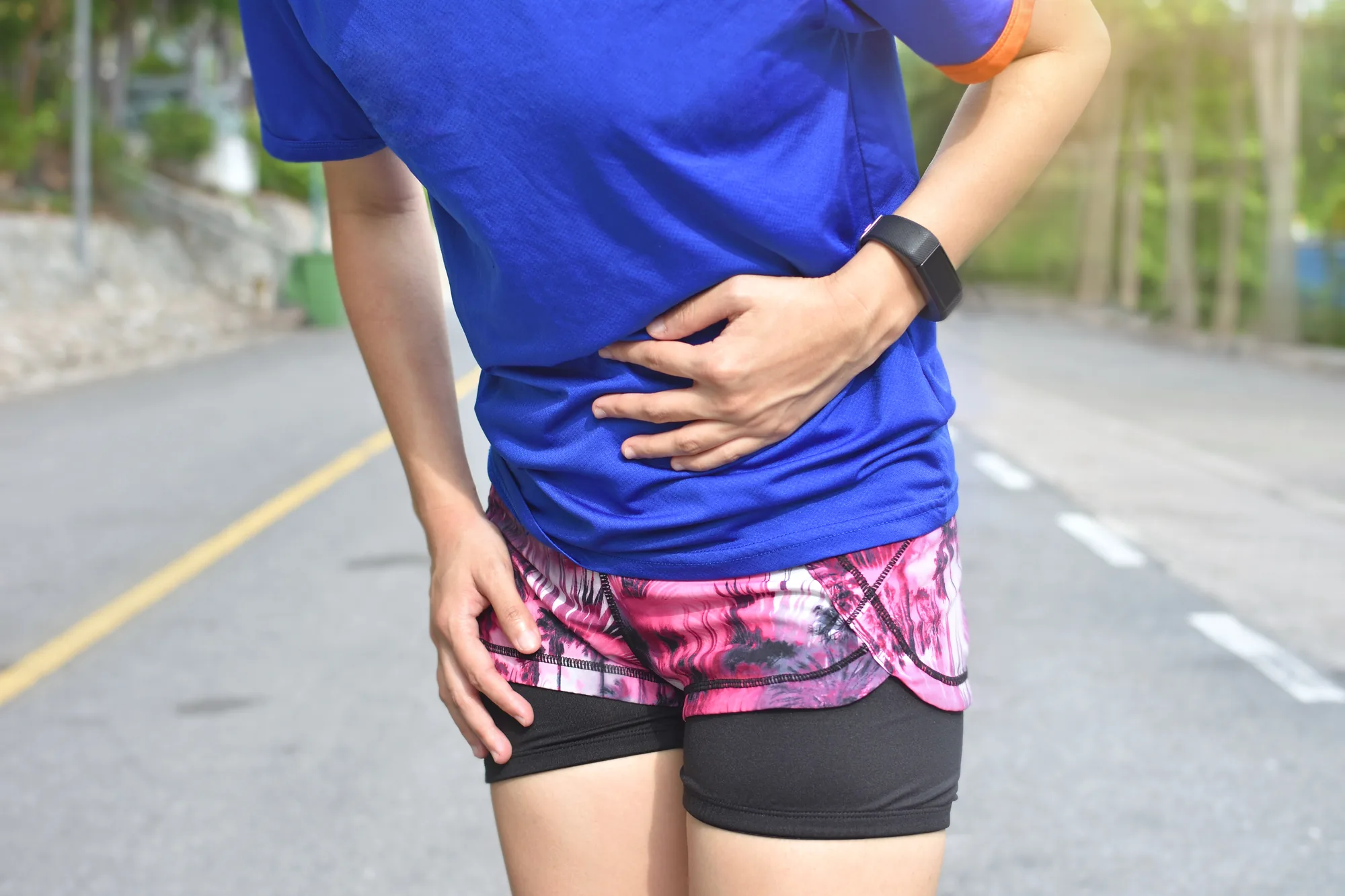
Sports hernia vs. hip flexor strain is a distinction I regularly make in the clinic, especially from years of covering athletes at the professional and collegiate level. Both injuries cause groin and lower abdominal pain. Both tend to hit athletes who sprint, cut, or kick. Both can sideline someone for weeks if they’re managed the wrong way. The catch is that they respond to almost opposite treatment strategies.
Key Takeaways
- Sports hernia, known clinically as athletic pubalgia or core muscle injury, involves the muscles and tendons that anchor the lower abdomen and groin, not a true hernia with a bulge.
- Hip flexor strain involves the muscles that lift the thigh toward the body, most often the iliopsoas.
- The pain locations overlap significantly, which is why a hands-on exam matters more than a guess based on symptoms alone.
What a Sports Hernia Actually Is
Despite the name, a sports hernia isn’t a true hernia. There’s no visible bulge and no hole in the abdominal wall the way there is with an inguinal hernia. What’s actually happening is a strain or tear involving the muscles and tendons that stabilize the pubic bone. This often occurs at the point where the abdominal muscles and adductor muscles share a common attachment. That’s why the clinical term, athletic pubalgia or core muscle injury, is a more accurate description than “hernia.”
This injury tends to show up in athletes who do a lot of twisting, cutting, and kicking under load. Soccer players, hockey players, and football players are common examples. The mechanism is usually repetitive rather than a single dramatic moment, though a sharp movement can be the final trigger after weeks of building strain.
What a Hip Flexor Strain Actually Is
A hip flexor strain involves the muscles responsible for lifting the thigh toward the torso, most commonly the iliopsoas. This muscle group crosses the front of the hip joint. It takes on heavy load during sprinting, kicking, and rapid acceleration. A strain happens when the muscle or its tendon is stretched or loaded beyond what the tissue can handle. This can range from a mild pull to a more significant tear.
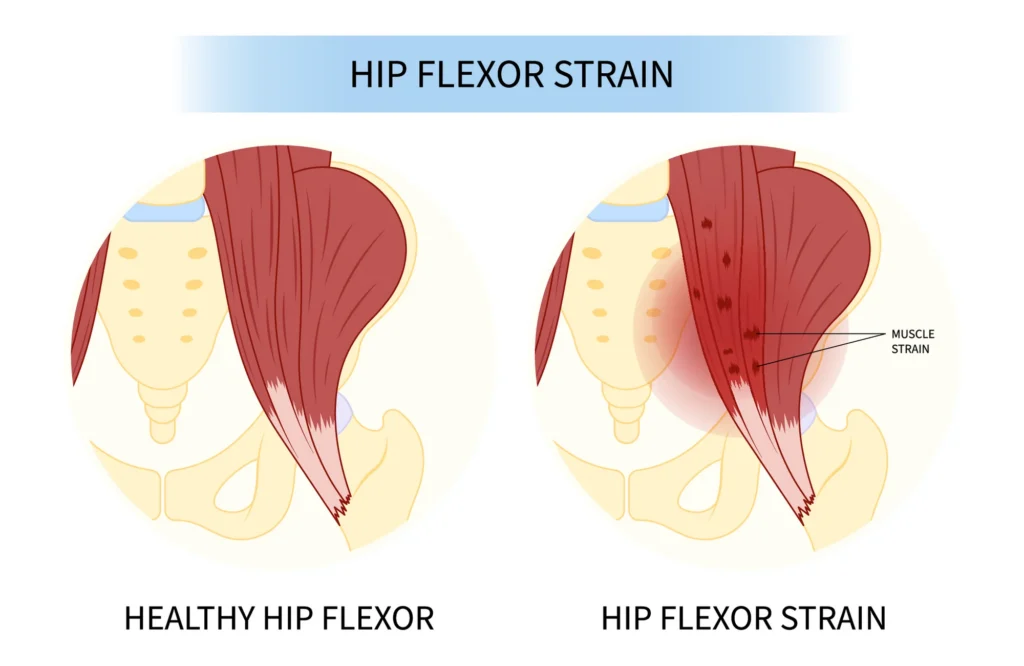
Unlike a sports hernia, a hip flexor strain is a fairly straightforward muscle injury. It generally behaves the way other muscle strains do elsewhere in the body.
Why These Two Get Confused
Both conditions can cause pain in the groin and lower abdominal region. Both flare up with similar movements: sprinting, kicking, sit-ups, and sudden changes of direction. Patients often can’t pinpoint whether the pain is coming from deep in the groin, the lower abdomen, or the front of the hip. The anatomy in that area is compact, and the pain patterns genuinely overlap.
The exam is where the two conditions usually separate. Resisted hip flexion that reproduces pain points toward a hip flexor strain. Pain with resisted sit-ups, resisted adduction, or pressure over the pubic bone points more toward athletic pubalgia. Imaging, usually an MRI with a protocol designed for this exact question, can confirm the diagnosis when the exam findings are ambiguous.
Treatment Differences That Actually Matter
Hip flexor strains typically respond well to rest, gradual reloading, and physical therapy. Most athletes return to sport within a matter of weeks, depending on severity. Pushing too hard, too early, is the main risk, since re-straining a healing muscle resets the clock.
Athletic pubalgia takes a different path. Conservative treatment is still the appropriate starting point for most athletes. That means physical therapy focused on core and pelvic stabilization, activity modification, and sometimes targeted injections. But when symptoms persist despite a genuine rehab effort, surgical repair becomes a conversation. Treating a sports hernia like a simple strain, and just resting it, is one of the more common reasons athletes bounce in and out of the same injury for an entire season.
Risk Factors Worth Knowing
Both injuries tend to cluster around the same risk factors: a sudden jump in training volume, limited hip or core strength heading into a season, and sports built around repeated sprinting, cutting, or kicking. Preseason conditioning that skips core and hip stabilization work is one of the more preventable contributors I see. This shows up especially in athletes returning from an off-season layoff who ramp up sprint and change-of-direction work too quickly. Asymmetric strength between the hips and the core, where one side is noticeably weaker than the other, also can show up in athletes who go on to develop either injury.
When Both Are Involved
Sometimes the answer isn’t one injury or the other. It’s both at once. A hip flexor strain and early athletic pubalgia can develop together, especially in athletes who compensate for one injury by overloading the muscles around it. When I see a patient who improved partway with hip flexor treatment but plateaued before full recovery, I go back and check the pubic bone and adductor origin again rather than assuming the initial diagnosis covered everything.
What I See in My Patients
I see this mix-up constantly in athletes who’ve already been through a round of treatment somewhere else before they get to me. A soccer player gets told he strained his hip flexor. He rests two weeks, feels better, returns to full training, and the pain comes right back within days. That pattern, quick improvement with rest followed by a fast relapse once activity resumes, is one of the clues that makes me suspect athletic pubalgia instead of a simple strain.
Covering athletes at the collegiate and professional level taught me not to take the first diagnosis at face value when the story doesn’t quite fit the expected recovery curve. Groin pain that doesn’t behave the way a straightforward muscle strain should behave gets a closer look from me, not just a longer rest period.
My Approach to Treatment
I start with a detailed history built around exactly how and when the pain shows up. That pattern often tells me more than the initial exam does. From there, a focused physical exam checks resisted hip flexion, resisted adduction, and pubic bone tenderness separately, because lumping them together is how this diagnosis gets missed. When the picture is unclear, I’ll order an MRI protocol specific to this region rather than a generic hip study.
For a genuine hip flexor strain, I keep the plan simple: relative rest, progressive loading, and a return-to-sport timeline based on strength testing rather than a calendar date. For athletic pubalgia, I start with a structured core and pelvic stabilization program and give it a real trial before considering anything else. If that doesn’t resolve symptoms after a reasonable period, I discuss surgical repair. I’m upfront with athletes here in the greater Los Angeles area about what that recovery and return-to-play timeline realistically looks like, since the season calendar is usually part of the decision.
Summary
Sports hernia vs. hip flexor strain comes down to two different injuries that happen to share a neighborhood and a set of aggravating movements. A hip flexor strain is a muscle injury that generally improves with rest and progressive rehab. A sports hernia, or athletic pubalgia, involves the tendons anchoring the abdominal wall and groin, and sometimes needs surgical repair when conservative care doesn’t resolve it. If your groin pain keeps coming back every time you return to full activity, that pattern is worth a focused exam rather than another round of rest. Schedule an appointment so we can pin down which one you’re actually dealing with.
Frequently Asked Questions
Can I tell the difference between a sports hernia and a hip flexor strain on my own?
Not reliably. The pain locations overlap enough that a hands-on exam, and sometimes imaging, is usually needed to sort out which structure is actually injured.
Does a sports hernia always need surgery?
No. Most athletes start with a structured non-surgical program. Surgery becomes a more serious consideration when symptoms persist despite a genuine rehab effort.
How long does a hip flexor strain typically take to heal?
Mild strains often improve within a few weeks, while more significant strains can take longer. Returning too early is the most common reason recovery stalls.
Why does my groin pain keep coming back after I rest and return to sport?
That pattern, quick relief with rest followed by a fast relapse, is a common sign of athletic pubalgia rather than a simple muscle strain. It’s worth having evaluated.
Which sports are most associated with these injuries?
Soccer, hockey, and football athletes see both conditions often, largely because of the repetitive sprinting, cutting, and kicking those sports demand.